
Kerrin Heba Massarueh: Reimagining Agriculture, Empowering Youth and Building Regenerative Futures
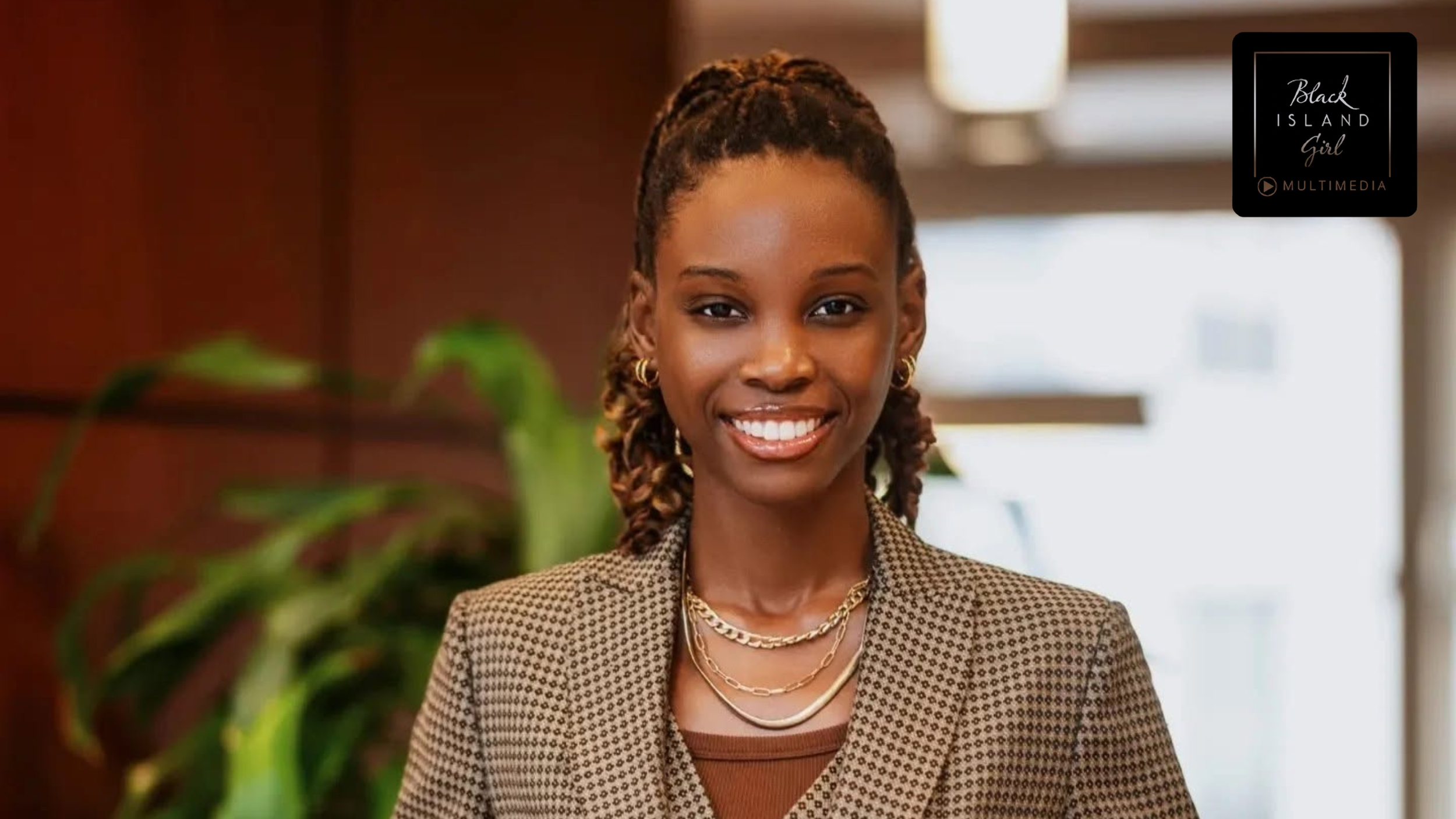
Kerrin Heba Massarueh
By Sémaj Bernard
For Dominican-American executive leader, agroecologist, and social entrepreneur Kerrin Heba Massarueh, agriculture is about far more than farming. It is about opportunity, innovation, food security, economic independence, youth empowerment, and building communities capable of creating solutions for themselves.
A recent guest on Jael Joseph LIVE, Massarueh reflected on her journey from Dominica to an international career spanning agriculture, youth development, technology, and social entrepreneurship. Her work today sits at the intersection of these fields, driven by a belief that meaningful change happens when people are given the tools, resources, and trust to become changemakers in their own communities.
Massarueh currently serves as Chief Operating Officer of UfarmX Inc, an agri-fintech company working to build credit infrastructure for African agriculture by enabling retailers, banks, and institutions to safely extend credit to smallholder farmers across Africa. She is also the Cofounder and Executive Director of BMoreAg Foundation, a nonprofit focused on empowering young leaders in the food system through agricultural education, workforce development, and youth leadership.
But her journey into this space was not always so clearly defined.
From Dominica to Agroecology
Born and raised in Dominica, Massarueh initially envisioned a very different professional path. Like many young people, she had a traditional career in mind—law. Her journey, however, eventually led her toward agroecology and social entrepreneurship, fields that allowed her to explore the connections between people, food, the environment, economics, and community development.
During her conversation with Jael Joseph, she spoke candidly about what it meant to be a young professional entering a space that many people may not immediately associate with innovation or ambitious career opportunities. For Massarueh, part of the work has been challenging those perceptions.
She recalled questioning what it meant to be a scientist working in agriculture, ultimately embracing the idea of making agriculture more exciting and attractive to a new generation.
“Let’s make agriculture sexy again.”
That philosophy has become central to her approach: agriculture should not be presented to young people as an outdated industry defined solely by manual labor. Instead, it can be a space for science, technology, entrepreneurship, finance, climate action, innovation, and wealth creation.
When COVID-19 Changed the Course
The COVID-19 pandemic became a significant turning point in Massarueh’s professional journey. As the pandemic exposed vulnerabilities in food systems and intensified food insecurity in communities around the world, she found herself drawn even deeper into work addressing these challenges.
Her work with BMoreAg in Baltimore, Maryland, allowed her to focus on food insecurity in urban communities while exploring how agriculture could become a vehicle for youth development and community empowerment. Rather than treating food insecurity as an isolated problem, Massarueh and her colleagues approached it as part of a much larger system.
That philosophy is reflected in BMoreAg Foundation’s work, which brings together agriculture, STEM, nutrition, financial literacy, leadership development, and workforce development.
For Massarueh, the connections are obvious.
“Everything is interconnected.”
She explained that creating an empowered young person cannot be accomplished by focusing on a single area of development.
“It doesn’t just take one thing to create an amazing human. It takes multiple pieces.”
That means considering whether a young person has access to nutritious food, educational opportunities, economic resources, leadership experiences, and the knowledge needed to navigate the world around them.
Agriculture as a Tool for Youth Empowerment
One of Massarueh’s strongest messages is that young people need to see agriculture differently. She wants the next generation to understand that agriculture can be a dynamic, technologically advanced and financially viable industry. Technology and STEM, she argues, can help transform the way young people interact with agriculture, opening doors to careers that extend well beyond traditional farming.
Her message to young people is particularly direct: there is money and opportunity in agriculture. She shared her determination to help young people in Dominica recognize the possibilities within the sector, emphasizing that agriculture can be a pathway to financial success and entrepreneurship.
“You can make mad money as a youth in agriculture.”
For a generation often encouraged to seek opportunities outside of agriculture, this represents a powerful shift in perspective. Massarueh wants young people not simply to participate in food systems, but to see themselves as innovators, business owners, scientists, activists, leaders, and decision-makers within them.
Believing in Young People
Youth empowerment is not simply a phrase in Massarueh’s work—it is a philosophy. Through BMoreAg Foundation and other initiatives, she has worked with young people through international delegations, retreats, agricultural programming and leadership opportunities.
Among the initiatives discussed during the interview were the Minomi debate and the Catalyst Retreat, which brought young people from different parts of the world to Dominica to engage with agriculture, social challenges and potential solutions.
For Massarueh, giving young people a platform is only the beginning. They also need to be trusted with responsibility.
“You got to believe in young people. You got to give them the opportunities because they’re going to prove other people wrong.”
Her experience has reinforced the importance of allowing young people to become active participants in conversations about the future rather than simply treating them as beneficiaries of programs designed by others. She pointed to the success of young people who have gone on to become voices for communities and people who may otherwise struggle to have their perspectives heard.
Beyond Grants: Building Regenerative Economies
Massarueh’s connection to Dominica also informs her perspective on the challenges facing young people at home. One of the more significant discussions during her appearance centered on access to resources, particularly the availability and distribution of grants for young entrepreneurs and emerging leaders.
While she recognizes that grant funding can provide important support, Massarueh believes the conversation has to go further. The long-term goal, she argues, should be the creation of regenerative economies—economic systems that allow communities and individuals to generate sustainable value rather than remaining dependent on short-term funding.
That means creating environments where young people can build businesses, generate income, access capital, develop skills and contribute to their communities. It is a shift from simply asking, How can we get young people funding? to asking, How can we build an economy in which young people can thrive?
A Global Perspective with Dominican Roots
Although Massarueh’s professional work now spans multiple regions, Dominica remains an important part of her story. Her experiences across the Caribbean, United States and Africa have given her a broad perspective on the challenges facing communities while reinforcing the importance of locally driven solutions.
Her work with UfarmX, for example, places her at the center of efforts to improve access to credit for smallholder farmers across Africa. Her work through BMoreAg focuses on equipping young people to become leaders in food systems and their communities. Across both roles, however, the underlying philosophy remains consistent: people should have the power to participate in shaping the systems that affect their lives.
That philosophy is rooted in Ubuntu—the belief in our shared humanity and interconnectedness—and in Massarueh’s conviction that communities are strongest when people have ownership of the solutions they create.
Driven by Family, Purpose and Possibility
Despite the challenges that come with working across complex systems, Massarueh remains deeply motivated by her purpose. During her conversation with Jael Joseph, she credited the support of her family and her passion for the work as important sources of strength.
Her journey is ultimately a story of evolution: from a young Dominican girl who once imagined herself becoming a lawyer to an international executive helping rethink agriculture, food systems and economic opportunity.
But perhaps the most significant part of Massarueh’s work is the future she is trying to help create. A future where young people see agriculture not as a fallback, but as an opportunity. Where technology and farming coexist. Where food security is connected to education, health and economic opportunity.
Where communities have greater ownership over the solutions they need. And where young people are trusted to lead.
For Kerrin Heba Massarueh, the work is not simply about changing agriculture. It is about changing the way people see what is possible, and empowering them to build it themselves.